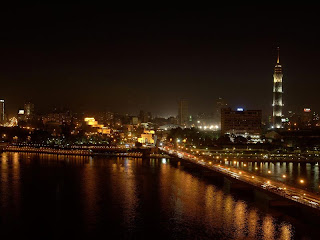
Cairo


Cairo is a vibrant, exhilarating, exotic, fascinating and welcoming city. Home to the best Pharaonic, Coptic and Islamic sights in Egypt, this city is where you never know what incredible, half-forgotten monument you might stumble across while wandering around. Enjoy the Nile view from your hotel room balcony, visit the capital's medieval markets by Khan El-Khalili, or walk down the Nile promenade. There are also plenty of cinemas, theatres and modern malls. Go for an opera or enjoy oriental music dance shows. Good for short breaks and long stays; you’ll get to see the Giza Pyramids, thousands of ancient artifacts in the Egyptian Museum of Antiquities and much more.

Moreover, Cairo is for everyone, there are plenty of mid range and budget accommodations to choose from. Pick a charming boutique hotel in the heart of downtown or indulge in utter luxury in one of the city’s most luxurious establishments. These usually house professional Spas and wellness centres where you’ll be treated like royalty. There are more than 75 four and five-star hotels in Cairo, which all offer stunning views over amazing landmarks such as the majestic Nile, the Pyramids, beautiful parks and gardens, and upscale clubs and compounds.

The weather in Cairo is moderate and low in humidity at almost any time of the year, except for some specific times in summer. Highs of 36°C are common in July and lows of 21°C have been witnessed; the winter months in Cairo, especially January, are much more pleasant with temperatures ranging between 21°C and 15°C. Accommodation by the Nile offers some relief from the summer heat due to the lovely breeze that comes from the river. In March, April, and June the Khamaseen winds blow from the desert bringing with them higher temperatures and sand


THE NUBIA MUSEUM

Location:

Aswan, Egypt

How to get there:

International flights direct to Aswan, or via many European and Eastern European cities. Also package tours and charter flights. Contact us for details.

Description

The Nubia Museum harbors the history of the "Land of Gold" as the word Nubia in the Hieroglyphic, language of ancient Egypt in which pictorial symbols are used to represent meaning and sounds, means the "Land of Gold"...Hence, this land, over times, was abounding in monumental treasures.

The Nubia Museum, in Aswan, as a matter of fact, is deemed to be one of the most important Egyptian museums. A number of factors have combined together, yielding the magnificence of such museum, as it is the only unique open museum of its kind.

Preparing this museum lasted for ten years, all dedicated for hard work to come up with such lovely museum. Let alone, it stands as a wonderful model of international cultural cooperation representing in United Nations Educational, Scientific, and Cultural Organization (UNESCO).

In April 6 th, 1959, the Egyptian government appealed to the United Nations Educational, Cultural, and Scientific Organization (UNESCO), seeking help to salvage the monumental sites in Nubia, hence, the area between Aswan and the Sudan was inundated by the Nile waters especially after completing the Aswan Dam.

The response of the (UNESCO), in fact, came fast, as it called upon the international community to contribute to this project.

Since then, (UNESCO) has been a key player in the archaeological field in Egypt.

In no time, the executive committee, comprising representative of 15 member states, was set up, and was commissioned with studying technical, monumental and financial reports with the aim of providing the (UNESCO) with basic information required to effectively implement the project.

The (UNESCO), obviously, has contributed much to nudging the entire world to pay more attention to saving such invaluable monuments. By the end of 1975, and as a result of this relentless support on the part of the (UNESCO), the donations influx - contributed by 24 countries - amounted to $ 123304.

Unsurprisingly then that the operation of saving the Nubian monuments was described as the greatest in the history of saving monuments.

The operation, as known, included dismantling Abu Simbel Temple, inter alia, moving it to another area to be reassembled once again. Abu Simbel Temple was completely dismantled to 1036 pieces, each with average of 7 to 30 tons, as they were rebuilt on the top of the mountain
overlooking the genuine spots, drawn by the ancient Egyptians 3000 years ago.

The world outcry, however, was translated into many concrete actions; donations to salvage the deteriorated-condition monuments, a number of excavation missions - which pursued their tasks in such hard conditions in areas extend 500 kilometres along the Nile banks.

A number of 40 missions have taken part in this great but difficult job, unearthing several priceless treasures dating back to pre-history times; Pharaonic, Greek, Roman, Islamic and Coptic.

Fossils, which were discovered during excavations, undoubtedly provided full knowledge about Nubian life and its development along ages.

In January, 1975, the General Egyptian Authority for Antiquities submitted a request to the (UNESCO) seeking the organisation's assistance to preserve the ancient Egyptian monuments, through establishing a city for museums harbouring a cluster of open museums with a view to displaying rare and wonderful monuments of various ages.

Being the main supporter to save the Nubian monuments, the (UNESCO) approved this request, and entrusted the executive committee, responsible for salvaging operations, with assuming the tasks of this new project. This committee was named the "The Executive Committee for the International Campaign for Establishing the International Museum of the Monuments of Nubia in Aswan, and the National Museum for Ancient Egyptian Museum in
Cairo".

Since February, 1981, a number of symposiums and seminars was held for contribution to this great project. It was the first time in the history of the (USECO) to decide launching an international campaign to establish local museum. This, however, could be ascribed to the magnificent monumental treasures Egypt has.

On February 4 th, 1986, the foundation stone of the museum of Nubia was laid down, playing new effective role that was derived from the spring of culture and civilization at both home and international levels.

To the Egyptians, the museum is to display life over centuries. As for foreign visitors, the museum will show the history of such unique area, as a source of knowledge for researchers from around the globe.

The International Museum of Nubia is located in Aswan on an area of 50,000 square meters, 7000 of which are excluded to building, while the rest designed to be the yard of the museum.

The building has three floors for displaying and housing, in addition to a library and information center. The largest part of the museum is occupied by the monumental pieces, reflecting phases of the development of the Nubian culture and civilization.

Three thousands pieces of antiq., representing various ages; Geological, Pharaonic, Roman, Coptic and Islamic, were registered. The open-door exhibition includes 90 rare monumental pieces, while the internal halls contain 50 invaluable pieces dating back to the pre-history times, 503 pieces belong to Pharaonic time, 52 of Coptic era, 103 of Islamic age, 140 of Nubian time, in addition to 360 pieces having the tang of Aswan.

The work in this unique edifice lasted for 11 years straight, and cost LE 60 million.

The museum of Nubia gained this unique position simply because it harbors unique monuments not in any elsewhere.

It houses the statute of Ramsis II, which was laid at the very forefront of the Museum, statute of Amenras the spiritual wife of Amen, she is of Nubian origin. It, also, has the head of the Shpatka, of the Nubian origin, made of rosy granite, head of black granite of Tahraqa, the Nubian King, whose reign during the 7th century BC was said to be full of prosperity. There is a temple of his name with gold-plated pillars.

There are, also, four mummies for nobles, which were found in Kashmatkh town in Nubia.
The museum, as well, houses several models and styles of the Nubian heritage, the panorama of the Nile, depicting live image of the River Nile streaming through its banks.

There is also a model for the Nubian-style house, typically copied to mirror the nature of life in Nubia.

All pieces exhibited in the museum reflect the character of the Nubia over history and display how it merged with the Islamic civilization on one hand and the mother civilization of Egypt on the other.

So, the museum of Nubia plays vital role not only at the level of promoting Nubia to the entire world but also at the level of maintaining monuments and supporting researchers, interested in Nubia, from around the globe.

This, however could be achieved through the museum's study center and the documentation centers which publish more information on the "Land of Gold" in Egypt, the past, the present and the future.

Nubia Museum, which hosts 3000 monumental pieces of several times, ranks tenth in the list of the museums inaugurated in Egypt over the past three years. An array of important museums, however, has been inaugurated; Mohamed Nagui Museum, Modern Egyptian Art Museum, Museum of Mohamed Mahmoud Khalil and his wife, Museum of Ahmed Desouki, Port Said Museum for Modern Arts, Taha Hussein Museum, and the Mummification Museum in Luxor.

THE ANTIQUITIES MUSEUM IN THE ALEXANDRINE LIBRARY

In 295 BC, the Egyptian Ruler Ptolemy I Soter, commissioned the construction of the Great Library of Alexandria (one of the cultural wonders of the ancient world).

In the following years, local scientists traveled through the region to purchase books for the library. The Library held many copies of important books of the ancient world as well as the originals of Euripides and Sophocles. All human knowledge of the ancient world was stored in the Library, not just of Egypt or the Greek territories, for Ptolemy I sent his representatives throughout the known world to collect reference works.

In 48 BC, the Library and at least 40,000 scrolls were burnt when Julius Caesar attacked the city (during the Alexandrian war) and a huge fire swallowed up the ancient Library. It would seem that this was the end of the fabled library and thus the end of a legend, but 2,000 years later, after 10 years of planning, the Egyptian government and UNESCO have combined their efforts in order to revive the ancient Library. The Alexandria Library has now risen from the ashes of antiquity so that it might once more lead the world as a cultural center and a focal point for knowledge not only in Egypt, bur for the world as a whole.

As part of the library, a new and very important antiquities museum has been created in order to highlight the history of Alexandria across the ages. It specifically highlights the cultural era of the Hellenistic world, providing exhibits related to knowledge and the arts.
The museum was ceremonially opened in January 2003. It now contains rare artifacts from the Pharaonic, Greek, Roman, Coptic and Islamic eras. These artifacts are displayed in chronological order, representing the evolution of writing, the birth of scholarship and librarianship, and the ancient arts with informative displays presenting mosaic, portraits, glassware, pottery, coins, textile and much more.
The museum is housed in section B1 of the Library complex on the ground floor of the main building. After passing through the security gate of the Library, take the stairs that lead down to the ground floor. On the right side of the stairs is the ticket office. General admission costs 10 LE for foreign tourists, and 4 LE for Egyptians. The admission charge includes the services of a guide, who will conduct a tour through the long corridors. The guides are proficient in English, French and German (and of course, Arabic).

Within the museum, one will immediately be astonished by the noticeable harmony between the interior design of the museum and the displays within. Finely coordinated exhibits are well lit and aesthetically pleasing.

The moment one steps inside the museum a beautiful Tableau hanged on the wall catches the eye. It is of a school girl, who sits on a stool copying out her lesson with a wooden stylus on a waxed tablet. It says of the statue that, "Education for girls as well as boys flourished at the ancient Library of Alexandria as attested by this Terra cotta statue dated circa 200 BC".

Lets explore the museum and see what sort of ancient wonders reveal themselves.

Pharaonic Antiquities

In the halls dedicated to ancient Egyptian artifacts, displays teach us particularly about the development of writing. Here, we find various statues of ancient Egyptian scribes and there, a collection of writing tools from the Pharaonic period. There are displays devoted to papyrus with an illustrated history of its use in Egypt as well as documentation on the evolution of writing through the period.

A limestone Fragment of a stela which bears part of seven columns of hieroglyphic inscription from left to right in praise of the God Amun. The fragment still retains its original colors. It dates to the New Kingdom when the cult of the God Amun spread and flourished and he became the official God of the Egyptian Empire.
Dimensions: H. 40 cm; W. 67 cm
Provenance: El Kurna

Alexandria's Sunken Antiquities
There is also space provided for Alexandria's sunken antiquities. It is believed that, due to a series of violent earthquakes, the northern parts of the city were lost to the Mediterranean sea. Archaeological exploration to recover these antiquities actually began in the gulf of Abu Qir in 1933 and in the Royal district (eastern harbor) in 1961, when the Egyptian Kamal Aboul Sadat reported seeing sunken monuments in the depths of the eastern port area, which faces Qaitbey Fort.

At first, divers retrieved a few pots, but soon they were also bringing up gold coins dating to the Byzantine period. Then they discovered a granite statue of Isis measuring 7.5 meters in height, spurring additional interest. In 1968, the Egyptian government requested assistance from UNESCO in the development of a map of the sunken antiquities in the eastern port area. UNESCO responded positively and the resulting map became the guiding reference for current work in the area.


Above: A white marble head of the god Serapis with inlaid eyes and a hole on the top for fixing a Kalathos. At left is the statue as it appeared when first discovered underwater, while at Right it is now in the Alexandria Library Museum.
Dimensions: H.57 cm – W. 35 cm Provenance: Abu Kir

In 1993, The European Marine Institute, a French expedition under the direction of famed under water excavator Frank Goddio, began work in both the eastern port area and at Abu Kir. The expedition was comprised of thirty Egyptian and French divers, and their work revealed thousands of items in the shadows of the Qaitbey Fort, including Pillars, crowns and statues. Jean Yves Empreur, one of the French archeologists, explains that the finds were almost certainly the remains of the ancient Pharos Lighthouse of Alexandria, which was one of the wonders of the ancient world, toppled by one of Alexandria's ancient earthquakes.

Above: A huge Royal head of Octavius in Gray granite wearing the Nemmes headdress. It dates to either the very end of the Ptolemaic (Greek) Period or the beginning of the Roman Period. Dimensions: H. 59 cm – L. 59.5 cm. Provenance: Eastern harbor.

Many of the artifacts from these underwater excavations are now in the museum's collection. These artifacts require special treatment due to their submergence in salt water which results in salt accumulations in the epidermis (skin) of the stone. After being removed from the sea, they are immediately placed in water tanks with the same solution of sodium as in the seawater. Then the sodium solution in the tank is gradually reduced, which results in the sodium within the artifacts slowly being released into the fresher water. Eventually, after about six months, the artifact is cleansed of its salt content and the process is complete. Only then can the piece be exposed to the open air without damage.

Greco-Roman Antiquities

Of course, the Alexandria Library was at the center of the Greco-Roman world, hosting both scientist and philosophers. Here, Archimedes invented his pump still in use today and known as Archimedes’s screw. Euclid wrote “Elements” (the base of Euclidean geometry) and “ Optics” (a treatise of geometrical optics). They were not alone and many famous scholars worked to, for example, isolate the function of the heart, calculate the circumference of the earth and even develop the concept of the leap year. In fact, the loss of the library in ancient times basically resulted in the loss of the combined knowledge of the ancient world.

Above: A white marble bust of Xenfon, which bears his name in Greek and dating from the Greek Period. Dimensions: H. 59 cm Below: A gold wedding Ring discovered at Abu Kir and dating to the Byzantine Period.

Within the Greco-Roman section of the library we find many statues of the most important Greek philosophers, orators, writers and historians, together with other artifacts of the period. Here, there is a glass cabinet which displays a collection of Golden Jewelry, rings and coins discovered at Abu Kir (1999-2000), some of which date back to the Greek Period.


Above: Two masks with the eyes painted black. Remains of the head bands can be seen on the forehead. These are funerary painted masks dating back to the Roman period. Painted masks were a part of Roman funerary customs. These masks were widespread in Egypt from the first Century until the fourth Century. They were inserted inside the sarcophagi between the wrapping of mummies, over the face

Above: Terra cotta cinerary urn :(Hadra Hydrae) were used to keep the ashes of deceased. They are named after the place where they were originally discovered in a region called “El Hadra” at the southern boundaries of the ancient city. They date back to the fourth century AD. The oldest of these Hydrae had a white background and this was also found in Athens, Rhodes and Cyprus where other Ptolemaic monuments came to light. Hydrae were manufactured in Alexandria and were usually decorated with geometric and floral designs, theatrical masks, mythological scenes and representations of deities in relief. Some of those vases were inscribed with the name, date of death and title of the deceased.

Above: The lid of a sarcophagus, which depicts a child lying down on his left side, putting his left hand under his head and wearing a dress with folds in high relief. This piece dates to the Roman Period.


Coptic and Christian Antiquities


Textile were the most distinguished product of Coptic Christian art. Thousands of pieces of textiles were found in Egypt, dating back to the Roman, Byzantine and Islamic eras. Most of them were woven of wool and flax and were characterized by the richness of their decorations which comprised geometric, floral designs, human figures, Christian motifs and even scenes from mythology.

Coptic textiles had many uses during Egypt's Christian period, including bed sheets and covers, towels, napkins, tablecloths and carrying sacks, while in churches and other public buildings, these decorative fabrics were used for curtains and hangings.

Most commonly, textiles during the Coptic period were used for clothing which, during that time period, most frequently took the form of a tunic, or rectangular shirt-like garment which was usually fastened at the waist by a belt. Textiles were also used for belts, cloaks and shawls. The tunics of Copts was most often made of plain wool or linen and adorned with either a single vertical band (clavus) that ran down the center of the garment, or two vertical bands (clavi) that fell over each shoulder and ran down to the knee or the bottom of the garment on both the front and back.


Islamic Antiquities


The Library of Alexandria's Museum also contains items from the Islamic Period. This was a period when Alexandria experienced its loss of status as the Capital of Egypt to what would eventually become Cairo. The museum contains collections of Arabesque wooden windows, carpets, tablets and lanterns.

Notably, in the seventh century AD, glassmaking flourished in Egypt and glassmakers inherited many of the techniques of their forbearers in the Byzantine and Sasanian empires. These included glassblowing, the use of molds, the manipulation of molten glass with tools, and the decorative application of molten glass. Islamic glass production from the seventh through the fourteenth century was also greatly innovative and witnessed glorious phases, such as those of superb relief-cut glass and spectacular gilded and enameled objects, that established its supremacy in glassmaking throughout the world.


Antiquities of the Bibliotheca Alexandrian Site
Prior to building the new Library of Alexandria, excavations were conducted on its future site in 1993. From this archaeological investigation, several unique Mosaic pieces immerged.


Above: This is a fragment of a mosaic floor dating to the Greek Period (second century AD). The central part is in the form of a circle, which is rare. It depicts a dog beside a Bronze Greek cup (askos). The details of the scene and reflection of light on metal (bronze) represent a high artistic standard attributable to the mosaic workshops of Alexandria, which produced wonderful work, especially those made for the Greek royalty. The style was derived from the Alexandria literary legacy established during the first three centuries BC for which Alexandria became famous. This artwork is called “opus vermiculum“, incorporating very small colored marble and limestone cubes. Dimensions: 1.35 by 1.35 m


Above: A fragment of a mosaic floor decorated with a combat scene between two gladiators, one black and one white, in a gymnasium or in a public bath. Beside them a fountain which dates the piece to about the second century AD. The scene represents the athletic life in Alexandria which brought together various human races Dimensions: 3.25 by 2.75 m


The Hall of the Afterlife

For the first time, in the Alexandrian museum, there is a hall devoted to the mummification process which not only provides information on ancient Egyptian mummification, but on this funerary practice in Predynastic times and during the Greek and Roman Periods.

Currently this hall has on display three mummies from different eras (ancient Pharaonic, Ptolemaic and Roman). One is the coffin of an individual known as Aba, son of Ankh-hor, who was the governor of Upper Egypt and head of its treasury. This wooden coffin is decorated with colored designs and hieroglyphic inscriptions including the Book of the Dead. It still retains much of its original colors. The mummy was brought from the excavation carried out by the Belgian mission at Asasif Necropolis (part of the Tombs of the Nobles) on the West Bank of ancient Thebes (modern Luxor). The exhibit includes four canopic jars that were used to preserve the organs of the deceased.


A second wooden coffin belonged to a Greek woman, who was also mummified. It is decorated with colored representations as well, including depictions of a winged goddess Isis. During this period, we know that it took only forty days for the mummification process, as opposed to the seventy days required during more ancient times.

The third mummy, without coffin, is that of a Roman woman wrapped in linen bandages and covered with five pieces of cartonnage.

There is also a collection of small funerary figures. These are often referred to interchangeably as Shabti, Shawabti and Ushabti, though in reality each of these terms refers to certain types of funerary figures specific to a time frame or location.

Initially, these magical figures were believed to act as a substitute for the deceased himself, although later they came to be regarded as mere servants in the afterlife. Hence, at first they were sometimes fashioned either as mummies or as living persons dressed in fine linen garb, but in later periods their appearance changed more to that of servants. A spell for this purpose appeared in the Middle Kingdom Coffin Texts, and from the New Kingdom the figures were inscribed with Chapter six of the Book of the Dead.

THE MUSEUM OF ISLAMIC ART

The museum of Islamic art is truly a wonderful reservoir of Islamic antiquities. It has a vast supplement of about 10200 artifacts that one cannot explore in a single day. The museum displays arts from the different Islamic eras that Egypt passed through including the Fatimid, Turkish and Persian periods. From the Fatimid Period, one can find a fine collection of wooden panels, which are the only surviving pieces of the Western Palace of Al Kahira Palace. And people love the craftsmanship of the Mihrabs of the tombs of Sayeda Ruqayya and Sayeda Nafeesa.
From the Ayyoubid Period one may find the beautifully carved wooden tabut (casket) of Al Hussein in addition to fine inlaid brass candlesticks. From the Mamluk period there is a collection of enameled mosque lamps as well as inlays of metal, wood and marble on pieces of furniture and various objects. And the Tatar El Higaziya provides us the minbar from their Madrasa (Mausoleum). The boxes of the Quran that once belonged to Sultan Shaaban are real pieces of art representing meticulous crafting. The beautiful Iranian and Turkish carpets are simply eye catching. The courtyard area contains a lovely nineteenth century Fountain obtained from the Monasterli Palace on Rhoda Island.
These antiquities are only a fraction of the displays in the museum. They are only examples of the most prominent artifacts in the museum. The museum of Islamic Art is in Bab El Khalq Square in the Egyptian library. Take Port Saed Square to reach the intersection with Muhammad Ali St. in Ahmad Maher Square. The museum is open throughout the week from 9 am to 4 p.m. except on Fridays, when it is open from 9:30 am to 11:30 am and from 1:30 p.m. to 4p.m.
On the other hand, in you take a look at Cairo you will find Islamic architecture every where. Old (Historic) Cairo is an open museum of the beautiful architecture of Islam where one may find that geometrical shapes are the main elements of this fine art. This is because in Islam it is thought that images of people is a return to pagan idolatry ages. So instead, Islamic art is uses designs (arabesque). Islamic art has changed with the change of ruling periods. This evolution of Islamic art started from the Fatimid period. Examples of architecture of the Fatimid period are the Azhar mosque and El hakim Be Amr Allah mosque. The following period was that of the Ayyubids, and the citadel is the best example of the art and architecture of this time interval in Egypt. The Mausoleum of Sultan Al Mansour Qalawon symbolizes the Bahri Mamluk period. The Circassean Mamluks follow the Bahri Mamluks and they built many educational buildings like the Mausoleum of El Zahir Baybers and the mausoleum of Sultan El Ghuri. The mosque of Mohammed Ali embodied the Ottoman period.

THE POLICE MUSEUM AT THE CITADEL

The last time I was in the Citadel to visit the military museum I noticed the Police Museum, which seemed interesting, so I decided I would have to make a return trip to visit it as well.

I was beginning to get used to the long stretch leading up to the entrance of the Citadel. Today, there was not as much security as on several other visits. I only had to pass through the metal detector gate and then I was inside the Citadel. As usual, there were many school groups visiting the Citadel. It is considered one of the most popular school trips. And as usual, there were many tourists. The Citadel is large, but I have now gotten to know my way around, and I knew exactly where to find the Police Museum.
The Police Museum is a huge building with small windows that were once probably used by archers. There is an Egyptian flag atop the gate, and the gate itself is ancient, decorated with simple old Islamic arabesque.

Once I entered the gate I found some Arabesque style chairs and a sofa to the right. Afterwards, I found some wooden and brass souvenirs. At first I thought it was just another gift shop. However, when I saw some people building a stage, I realized that they were organizing the place for musical concerts that sometimes take place in the Citadel, and these souvenirs are for the people who will attend the concert
To the right, I found another sign pointing to the Police National Museum. Next to the stairs of the museum, there was a huge statue of a lion. I think it's not ancient. It looked like it was made by a famous Egyptian sculpture such as Mahmoud Mokhtar as a gift to the museum.

Once inside the museum, the first corridor contains portraits of Egyptian ministers throughout history. It is not very interesting, other than for observing the changes in their clothing throughout time. After that, the first hall of the museum consists of weapons used by the Egyptian police throughout time, including the Pharaonic Period. In fact, there were many ancient shields and weapons in the hall, along with modern guns, mostly of British origin due to the British occupation of Egypt. There are also some shields and helmets from the Islamic Period, including one helmet dating to the Islamic year 11. It has Arabic sentences from the Qura'n meant to protect the soldier who wore it.
The next hall is the Ismailia battle hall. It contains displays related to the battle of the Egyptian police against the British occupiers in 1951. This was one of the main triggers of the Egyptian revolution in 1952. This hall contains some real pictures of the battle and some weapons the Egyptians and the British used. In the middle of this small hall there is a small scale model of the police station in Ismailia and of the battle that took place.

The crimes hall is the most interesting in this museum. At various points in time, money forgery has been a problem in Egypt, and there are displays of printing machines and of counterfeit bills that look very real. Some criminals even produced fake coins, which was a difficult task, as well as other currencies including American.
Then there are displays of the famous Egyptian criminals through time. One is of Mahmuod Amin Mahmoud, who was born in 1929. He lived in many different places like Maadi and Darb Ahmar and he committed more than 30 crimes of theft and murder. He eluded the police for many years, but died in 1960 in a battle with them. There are a number of displays, including a few real pictures of this scary individual.
However, to the left of Mahmuod Amin there is a display of the most famous criminals in modern Egyptian history. They are Rayya and Sekina, two sisters who organized a prostitution ring at the beginning of the last century. That wasn’t their main crime though. They would kill women and steal their jewelry and money and then would bury them in an apartment the sisters owned next to the police station in Alexandria. One of their ploys was to approach women in the market and convince them to come back to their apartment to look at clothes they had for sales. Once the victim entered the apartment, they would kill her, rob her of whatever she had, and bury her in the same apartment. It was very hard for the police of Alexandria to capture them but they eventually did.
The remainder of the displays in this small museum are mainly historic items that the police confiscated from those trying to smuggle the artifacts out of the country. Most of these are small statues that date back to the Greek Period in Egypt.

To be honest, I was a bit disappointed with the Police Museum, but I suppose it was worth a quick visit. Egypt is really working to upgrade their museums, and many of the newer ones, such as the Luxor Museum, are very nice and employ modern museum sciences. This one is not one of those at this point. Of course, we do try to inform tourists of what might, and might not be very interesting.

THE RAMATAN TAHA HUSSEIN MUSEUM

Dr. Taha Hussein (1889-1973) is the doyen of Arabic literature and one of the most celebrated figures of Egyptian contemporary cultural and intellectual history.
He emerged from the Egyptian countryside and from the cloisters of Al-Azhar University to enrich the Arabic library with more than fifty books dealing with literature, history, philosophy and education. Almost all his books have been translated into several languages.
Dr. Taha Hussein transcended the reality in which he lived by opening up to the study of humanities without losing his originality. He was awarded more than 36 Egyptian and foreign decorations foremost among which was the Collar of the Nile which is the highest decoration in Egypt conferred on Kings and Heads of State. He also obtained the United Nations Prize for his achievements in the field of human rights.
He occupied senior university posts including a professor of ancient history of Arabic literature, dean of the Faculty of Arts at Cairo University, a general supervisor or of culture at the Ministry of Education, Rector of Alexandria University, and chief Editor of "A1 Katib A1 Araby" (The Arab Scribe) magazine.

In 1950 he was selected as Minister of Education. He introduced a number of reforms most important of which was the establishment of the principle of free education in Egypt.
In recognition of all Dr. Taha Hussein's achievements for Egypt the State bought his residence in the Pyramids district after his death and converted it into a museum carrying the name "Ramatan" which literally means in Arabic the two oases where traveling caravans stop to take rest. As Dr. Taha Hussein was keen on having his son Dr. Moeniss share his residence, he designed the villa with two entrances to preserve each one's privacy and freedom.
That is why he called it "Ramatan" or two places of rest for him and his son.
The museum or "Ramatan" is made up of two stories. The ground floor houses Dr. Taha Hussein's study and a part of his 7,000 book library, a great reception hall where he received men of letters, politicians and artists every Sunday evening. In one of the corners of this hall stand a huge piano, a gramophone and records of rare musical works by Schubert, Verdi, Bach, Mozart, Schumann and others.
The top floor has three bedrooms and a small hall where there is a closet enclosing all the decorations, medals and orders which the Doyen received during his lifetime.
The garden has a bust for Dr. Taha Hussein by the noted Egyption sculptor Farouk Ibrahim. A smaller building designed in the same style of the villa has been converted into a cultural center which will be used for holding seminars and cultural exhibitions to keep Dr. Hussein's legacy alive .


November 14th, 1889
The Birth of Taha Hussein
An Egyptian leader of enlightenment
(1889-1973)


He was born in Upper Egypt and lost his sight at the age of three.

Taha Hussein is the doyen of contemporary Arabic literature and a pioneer of enlightenment.

When he assumed office as Minister of Education in 1950, he managed to put his motto, "Education is like water we drink and the air we breath," into practice.

In 1914, he received the first doctorate granted by an Egyptian University.

He succeeded in making all elementary and secondary education free.

In 1918 he obtained another PhD in Social Philosophy from the Sorbonne, Paris.

In 1919 he received a diploma in post-graduate studies in the Roman Civil Code from the same university.

He was granted honorary doctorates from the universities of Oxford, Madrid, and Rome.

In 1919 he was appointed a professor of history at the Egyptian University. He did not confine himself to political and constitutional history but transferred to his students his knowledge of Greek drama such as Sophocles and Aeschylus.

The greater part of Taha Hussein’s canon is basically influenced by Greek culture. He issued "Selected Pages" from Greek Dramatic poetry (1920), "The Athenian System" in 1921, and "Leaders of Thought" in 1925. Thus, the link between his Arabic culture with that of Greece was a turning point as thinker.

The first book was an incomplete attempt at an expose of Greek poets and their works. The second book was a meticulous translation of one of the most important texts of Greek history of civilization. He deals with the religious impact on thought in the Middle Ages, then moves on to the Modern Ages of multi influences.

Thus, Taha Hussein was not merely influenced by Greek thought in his literary work but also in his books on politics and civilization. The books he issued following his return from Paris greatly influenced modern Arabic classical literature.

He waged many battles for enlightenment, the respect of reason and thought, and women’s emancipation. The first of these was in 1926 when he issued "Pre-Islamic Poetry", which was highly controversial in both politically and literary circles. It aroused wide-scale front page arguments in newspapers between supporters and opposers. In self defense he argued that he adopted a scientific method of approach in his treatise on Pre-Islamic poetry. That method, he said, was adopted by western philosopher scientists and men of letters who followed the French philosopher Descartes in his reasoning in search of the truth of beginning. It renovated science and philosophy and changed the outlook of men of letters and artists in the West.

MUSEUM OF MOHAMED KHALIL

Location:
Giza, Egypt
How to get there:
HOW TO GET TO CAIRO

From outside Egypt
International flights direct to Cairo, or via many European and Eastern European cities. Also package tours and charter flights. Contact your travel agent for details. Description Mohamed Mahmoud Khalil was one of the public figures who significantly affected the fine arts movement during the second quarter of the 20 th century. He was born in 1877 and died in 1953. In 1901, he went to France to study the Law at the Sorbone university. In 1903, he married Ms. Emiline Lock, who was studying music in Paris's Conservatory. She shared his interests in fine arts, especially painting. In 1937, he supervised the Egyptian pavilion in the International Exhibition of Paris. From 1938-1940, he was the chairman of the Egyptian Senate Council. Mr. Khalil and Prince Youssef Kamal co-established the Society of Fine
Arts Lovers, and Mr. Khalil became the chairman of the society from 1942 to 1952. In 1960 , his wife died after donating the palace and its contents of masterpieces and rare artifacts to the State to become a museum, carrying the name of Mahmoud Mohamed Khalil and his wife .

Mohamed Mahmoud Khalil’s palace was constructed in Giza around 1920, on the French style (Ardico), which was well known in France at that time. The eastern side of the palace, overlooking the Nile, carries some features of the (Arnoveau) Style that appeared in France in 1875, as evident from the metal and glass skeleton above the entrance of the palace. The surface area of the palace is 1400 squared meters, and the palace has four levels. The palace was inaugurated for the first time as a museum on July 23rd,1962. The museum was moved to the Prince Amr Ibrahim’s palace in Zamalek, Cairo, in July 1971. After remodeling, the museum was moved back to Mr. Khalil’s palace in September 1995.

MUSEUM OF ISLAMIC CERAMICS

When the Ministry of Culture decided to add to its series of specialised museums one for of Islamic ceramics, it chose the palace of Prince Ibrahim in Zamalek built in 1343 H. (1924 A.D.).

Undoubtedly, this choice was inspired by the palace’s impressive Islamic architecture and dercoration, as well as its location in a quiet and fashionable district in the heart of the city.

This splendid palace, a masterpiece in its own right, provides an ideal setting for the precious works of Muslim ceramists throughout Islamic history. The Museum of Islamic Ceramics, inaugurated late 1998, is an integral part of the renovated and refurbished Gezira Art Centre affiliated to the National Centre for Arts, Ministry of Culture.

The first of its kind in the Middle East, it houses a rare collection of ceramics acquired from different Islamic countries that represent various techniques of decoration applied in the Islamic world from Morocco in the west to Iran in the east. The collection comprises 315 pieces, of which 116 are from Egypt representing popular styles from the different Islamic eras, Umayyad, Fatimid, Ayyubid and Mamluk, 118 pieces in Turkish style ( Iznik and Kutahia ), 25 pieces in Syrian style (Al-Raqqa), 48 pieces in Iranian style, 2 pieces in Andalusian style, 2 pieces in Iraqi style and one piece in Moroccan style. The ceramics include vessels, jars, tiles, mugs, jugs, bowls, plates, pitchers, vases, lanterns, cups, the oldest dating back to second century Hijra and the most recent dating back to twelfth century Hijra.

The pieces, carefully selected from the acquisitions of the Gezira Museum (150 pieces) Islamic Art Museum (159 pieces) and 6 pieces from the very palace that houses the Museum of Islamic Ceramics, are displayed on two floors in a total area of 420 square meters.

MUKHTAR MUSEUM

The Mukhtar Museum was built to house the sculptures of Mahmud Mukhtar who is considered to be one of the greatest Egyptian sculptures. The building was designed by Ramesses Wissa Wassef and houses eighty-five bronze, stone, basalt, marble, granite and plaster works. One building contains a Planetarium, the Gezira Museum and the Museum of Egyptian Civilization. The Gezira Museum contains objects that were collected by the royal family.

THE MANIAL PALACE

The Manial Palace is said to have been built for Prince Mohammad Ali between 1899 and 1929. The palace was given to the Egyptian nation in 1955. Prince Muhammad Ali is the first cousin of King Faruq and the younger brother of Khedive Abbas II Hilmi. The complex consists of six structures. Among these structures is a museum in which Faruq's hunting trophies are found, the prince's residence and furnishings and a museum in which some of the family's memorabilia are found. There are also gardens that have beautiful plants and flowers that are worth seeing. The palace also includes a collection of manuscripts, carpets, textiles, brass work and crystal. Items that can be seen here are a table made of elephant ears and a 1000-piece silver service. On part of the original grounds a hotel has been built called the Meridian Hotel.